

Camyotopes: tapping into the dark genome
Camyotopes™ are proprietary tumor antigens from translated dark-genome regions. They expand the shared target space for off-the-shelf immunotherapies beyond recurrent coding mutations, with broader population coverage and more targets per patient.
How camyotopes arise
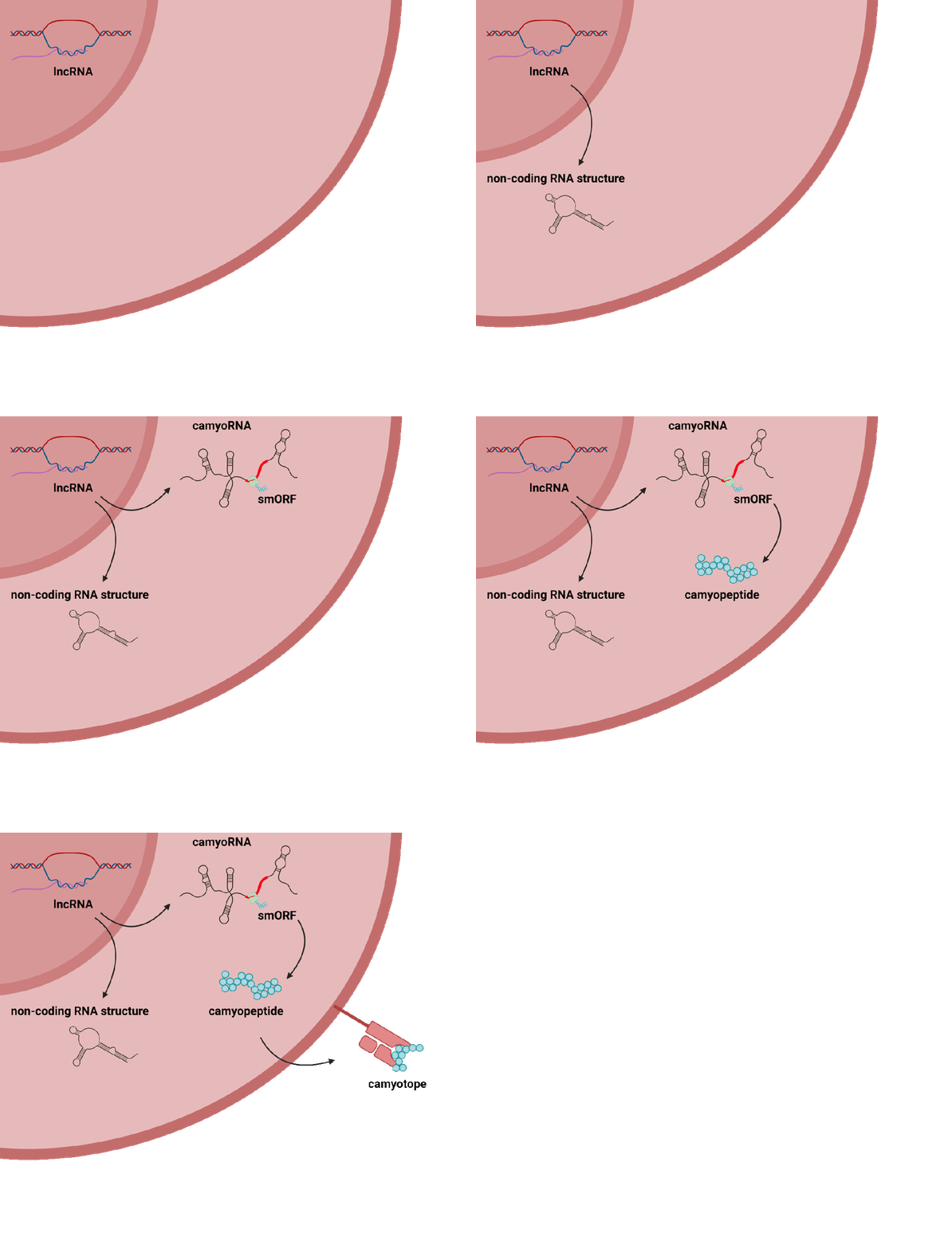
Tumors do not always respect the coding versus non-coding boundaries seen in healthy cells. Advanced analysis of the tumor epitope repertoire identified tumor-specific long non-coding RNAs, called camyoRNAs, that contain translatable small open reading frames.
camyoRNATumor-specific lncRNAs
CamyoRNAs are long non-coding RNAs expressed in tumor cells. Each can contain one or more small open reading frames (smORFs) that the cell can translate.
camyopeptideTranslated dark-genome peptides
Translation of those smORFs produces camyopeptides inside the tumor cell. Any immunogenic camyopeptide from this pool can be considered as a tumor-associated antigen.
camyotope™MHC-I epitopes for CD8+ T cells
Camyopeptides are processed into short epitopes, camyotopes, that are presented on MHC class I. Cytotoxic CD8+ T cells can recognize those complexes and kill the tumor cell.
Built for off-the-shelf immunotherapy, not a single mutation
Off-the-shelf vaccines are available faster and at lower cost than personalized products, but most shared formulations still struggle clinically. Recurrent mutation-derived neoantigens are scarce: a typical product leans on one frequent event, such as BRAF V600E, plus a set of low-prevalence antigens, and often reaches only 20-30% population coverage. Canonical tumor-associated antigens such as MAGE-A3 face similar limits on sharedness and on the number of usable targets per patient.
Coverage60-95% of a cancer population
Across indications, camyoRNA expression coverage averages 60-95%, compared with 20-30% typically cited for conventional off-the-shelf vaccines. That sharedness is not tied to a single recurrent coding mutation.
Targets per patientSix to eight effective antigens
Camyotope-based designs provide an average of six to eight effective targets per patient, versus one for many classical TAA products and four to six in personalized neoantigen vaccines. Multi-target responses lower the chance of immune escape.
ImmunogenicityStronger than common TAAs
Immunogenicity screening on healthy-donor material showed that a large fraction of camyotope pools elicit multifunctional T-cell responses in both high- and low-reactive donors, outperforming common tumor-associated antigens.
CamyoRNA expression is often limited to a specific tissue or tumor type, which can help limit off-target effects if targets are selected carefully. In colorectal cancer samples, prevalence was similar across stages, so camyotope-based products can be relevant in both early- and late-stage disease.
What makes a camyotope useful
Camyotopes combine tumor-specific abundance, high sharedness, and favorable translation, presentation, and immunogenicity profiles. In silico and preclinical data support further clinical evaluation.
Unique characteristics
- Cancer exclusive
- High abundance
- Up to 95% patient coverage
- Up to 95% HLA coverage
- Validated expression and translation
- Validated MHC-I presentation
- Validated immunogenicity
Used alone, or with other antigen classes
Camyotopes can anchor an off-the-shelf immunotherapeutic on their own. They can also be supplemented with other shared antigens, including targets from intron retention, transposable elements, and alternative splicing, when a cohort needs still broader coverage. In indications where shared targets are sparse, they can be combined with personalized neoantigens, and with other immunotherapies such as checkpoint inhibitors.
myNEO is advancing camyotope-targeting programs internally, starting with MNE-C261, an off-the-shelf mRNA vaccine for microsatellite-stable colorectal cancer, with clinical initiation targeted for Q4 2027.
The evidence behind camyotopes
The camyotopes whitepaper describes how tumor-specific lncRNAs yield shared MHC-I targets, and how coverage and immunogenicity compare with classical tumor-associated antigens and mutation-derived neoantigens.
What are camyotopes™?
Camyotopes™ are proprietary tumor epitopes derived from the dark genome. Tumor-specific long non-coding RNAs, called camyoRNAs, contain small open reading frames that produce camyopeptides. These peptides are processed and presented on MHC class I, where CD8+ T cells can recognize them. myNEO is developing off-the-shelf camyotope-targeting immunotherapies.
What makes camyotopes different from other shared tumor antigens?
Camyotopes are not dependent on recurrent coding mutations, providing a broader candidate pool for multi-target approaches that may reduce immune-escape risk. Within a given indication, current data report camyoRNA population coverage of 60-95%, compared with 20-30% cited for conventional off-the-shelf vaccines. Camyotope-based designs provide an average of six to eight effective targets per patient.
Have camyotopes been experimentally validated?
Camyotope targets have been validated preclinically across multiple endpoints, including immunogenicity and tumor-killing potential, where they outperformed conventional shared antigens. myNEO is working toward initiation of a first Phase I/IIa trial of the lead program, MNE-C261, by Q4 2027.
Can camyotopes be combined with other antigen classes?
Yes. Camyotopes can be used on their own or supplemented with other shared antigens, including targets from intron retention, transposable elements, and alternative splicing. In indications where shared targets are sparse, they can be combined with personalized neoantigens, and with other immunotherapies such as checkpoint inhibitors.
Are camyotopes relevant across disease stages?
In colorectal cancer samples, camyoRNA prevalence was similar across stages, indicating that camyotope-based therapeutics can be relevant for both early- and late-stage patients. Expression is often limited to a specific tissue or tumor type, which can help limit off-target effects when targets are selected carefully.