

The technology behind immune target discovery
myNEO develops computational technology to find and rank immune targets from genomic data. This page covers our antigen discovery pipeline, presentation and immunogenicity algorithms, and dark-genome tumor antigens. Those capabilities also power our solutions for vaccine, T-cell, and biologics programs. See how this differs from mutation-list and binding-only pipelines.
Antigen and neoantigen discovery pipeline
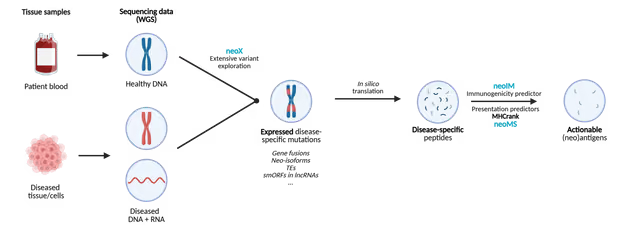
ImmunoEngine is myNEO's antigen discovery pipeline. It identifies tumor-specific antigens from whole-genome sequencing and ranks candidates by MHC presentation and immunogenicity.
Most neoantigen pipelines focus on whole exome sequencing and stop at SNVs and indels. ImmunoEngine uses whole-genome sequencing, capturing transposable elements, intronic events, gene fusions, as well as dark-genome targets such as camyotopes. This broad antigen search space is especially relevant for patients with low tumor mutational burden. Furthermore, our prioritization tools neoMS (models the full MHC presentation pathway) and neoIM (predicts CD8 and CD4 T-cell immunogenicity) ensure only actionable, high-quality antigens are selected.
From presentation to immunogenicity
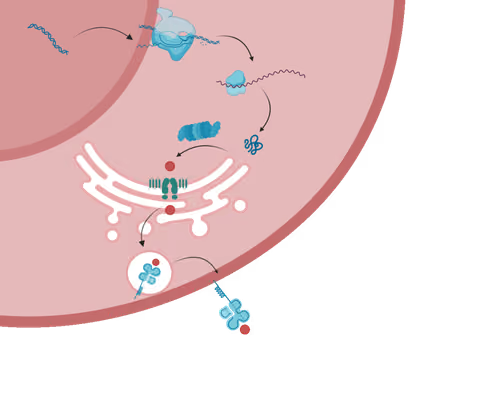
ImmunoEngine ranks candidates with two standalone algorithms. neoMS asks whether a peptide is processed and displayed on MHC-I or MHC-II. neoIM predicts whether CD4 or CD8 T cells are likely to respond. Each also stands on its own.
Is the peptide presented?
HLA-agnostic MHC presentation prediction that models the full antigen-processing pathway, not binding affinity alone.
Explore neoMS →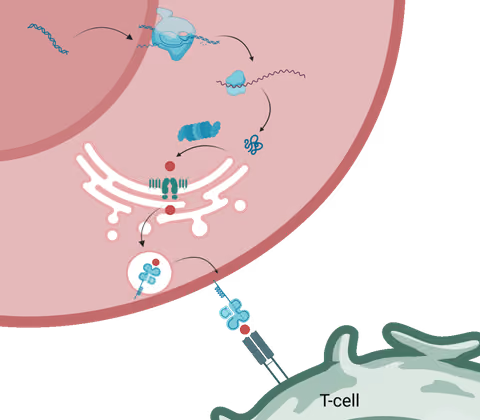
Will T cells respond?
Immunogenicity prediction for whether an epitope will activate CD8+ and CD4+ T cells.
Explore neoIM →Tapping into the dark genome
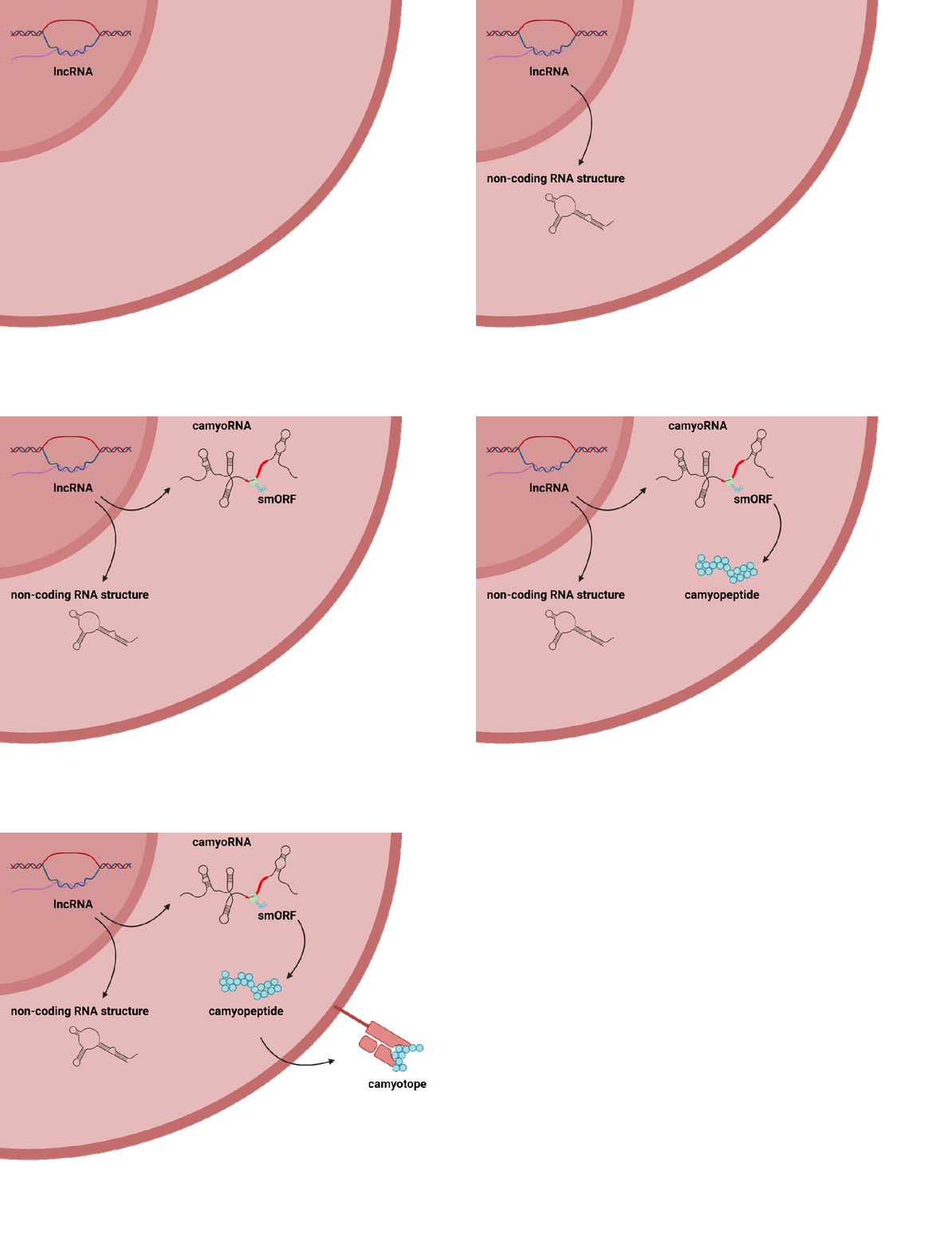
Through our deep expertise in whole genome target discovery, we explore the dark genome as an untapped source of antigens. Our unique technology has uncovered a novel source of dark targets, camyotopes, enabling a new approach for off-the-shelf immunotherapeutic development in solid tumors. See our internal programs advancing camyotope-based therapies to the clinic.
Unique characteristics
- Cancer exclusive
- High abundance
- Up to 95% patient coverage
- Up to 95% HLA coverage
- Validated expression & translation
- Validated MHC-I presentation
- Validated immunogenicity
Published methods behind the technology
ImmunoEngine, neoMS, and neoIM are described in peer-reviewed papers. The camyotopes whitepaper covers the novel shared antigen class for off-the-shelf immunotherapy.
What is ImmunoEngine?
ImmunoEngine is myNEO's computational antigen discovery pipeline. It calls variants from whole-genome tumor and healthy sequencing data, including events beyond SNVs and indels such as fusions, neoisoforms, and dark-genome camyotopes. It characterizes the patient's HLA type and tumor microenvironment, predicts MHC presentation with neoMS, scores immunogenicity with neoIM, and ranks the resulting targets.
What is neoantigen discovery?
Neoantigen discovery identifies tumor-specific antigens the immune system can recognize. ImmunoEngine performs neoantigen discovery from whole-genome tumor and healthy sequencing, then uses neoMS presentation prediction and neoIM immunogenicity prediction to rank candidates for vaccine, T-cell, and other immunotherapy programs.
Why does ImmunoEngine use both DNA and RNA sequencing?
myNEO uses DNA and RNA sequencing data from the tumor and DNA sequencing from matched healthy tissue. Comparing tumor and healthy DNA identifies alterations that are tumor-specific rather than inherited. Tumor RNA then shows which alterations are expressed, helping prioritize actionable targets for therapeutic development.
What is neoMS?
neoMS is myNEO's deep-learning MHC presentation prediction algorithm. Rather than modeling binding affinity alone, it models the full antigen-processing and presentation pathway. It is HLA-agnostic, enabling predictions for alleles not observed during training. Originally developed for MHC class I, neoMS now also covers class II.
What is neoIM?
neoIM is myNEO's machine-learning-based immunogenicity prediction algorithm. It estimates the probability that an epitope elicits a T-cell response. Candidate epitopes are ranked according to predicted CD8+ and CD4+ T-cell immunogenicity to support the selection of biologically relevant targets.
How does ImmunoEngine prioritize neoantigens?
ImmunoEngine scores both the genomic event and the peptide it produces. The event is assessed for prevalence, clonality, tumor specificity, and expression. The peptide is assessed for presentation likelihood and predicted immunogenicity. These factors are combined into a ranking used to select the final epitope set while accounting for immune-escape risk.
Why does myNEO use whole-genome sequencing instead of exome sequencing?
Whole-genome sequencing reveals tumor alterations that exome panels cannot detect, including gene fusions, transposable elements, neoisoforms, and translated non-coding regions. In tumors with low mutational burden, these dark-genome events can provide actionable targets when exome-based discovery finds few candidates. Whole-genome sequencing also supports higher-confidence variant calling.
What are the limitations of myNEO's computational predictions?
myNEO's outputs are in-silico predictions that prioritize and de-risk candidates before laboratory work. They reduce the number of candidates and experiments required, but they do not replace experimental validation and do not guarantee presentation, immunogenicity, safety, or clinical efficacy.
Talk to our team
Discuss ImmunoEngine, neoMS, neoIM, or camyotopes for your program.